Some pieces don't stay on the wall. They move. They grow. They find new rooms and new people and keep doing their work.
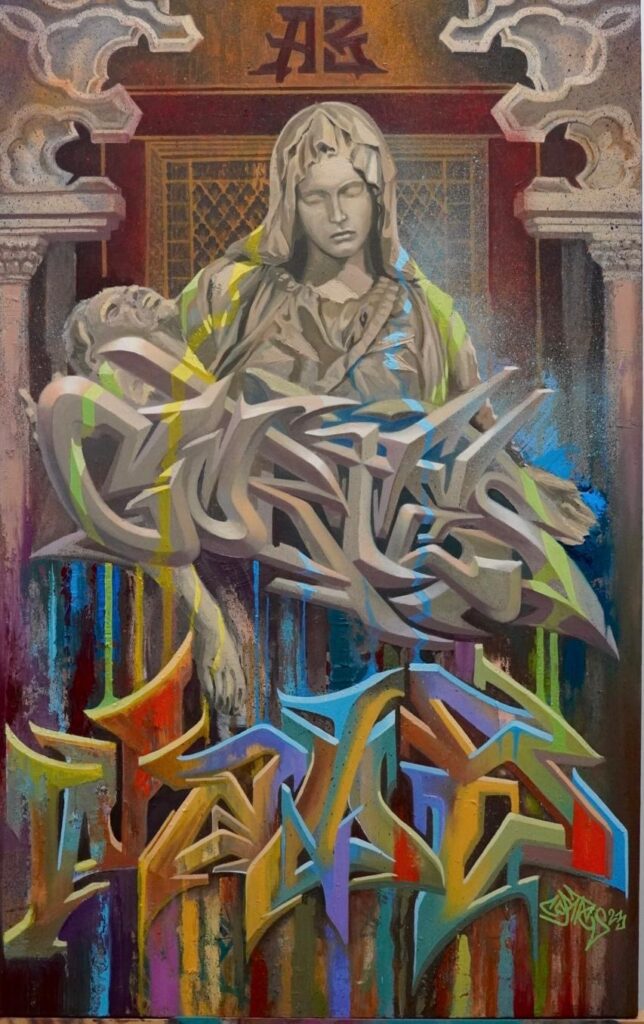
Graff Pieta 2 is one of those pieces.
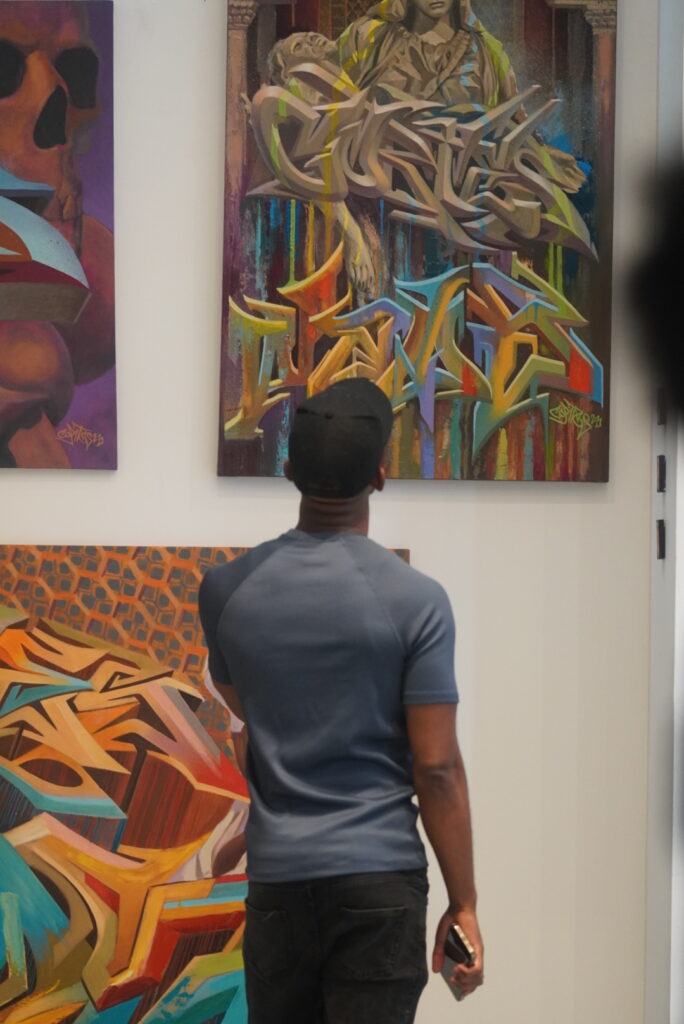
After its debut at Soirée Henzo: Renaissance of Reconnecting — a one-night pop-up in Chelsea where 100 artists filled the room with work from every genre and medium — the painting is now on exclusive view at Trends Gallery in Long Island City, as part of the group exhibit Life in Culture — Rhythm, the Pulse & the Present Moment, curated by Yvette Hidalgo (@ylove57).
Two Paintings. One Idea. Years Apart.
To understand Graff Pieta 2, you have to go back to where it started.
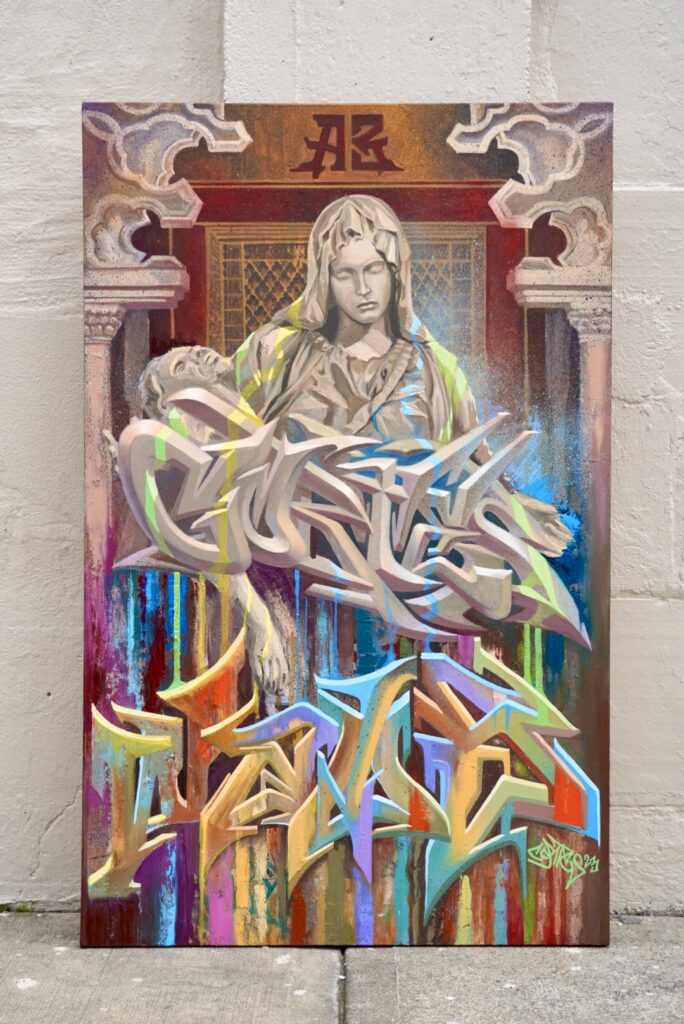
In 2011, Cortes painted the first Graff Pieta — oil on canvas. The composition is classical: two figures, one holding the other, rendered in warm earth tones with the careful, studied hand of someone who has spent serious time looking at what came before. The graffiti lettering appears within the scene as an object — angular, sharp, built from the same visual logic as the figures around it. Subdued purples and pinks. Nothing competing. Everything intentional.
The message was clear, even if it wasn't stated out loud: graffiti as a living idea. Not vandalism. Not a subculture footnote. A visual language worthy of the same frame as any classical form. The first Graff Pieta made that argument quietly, with restraint, in the language of fine art.
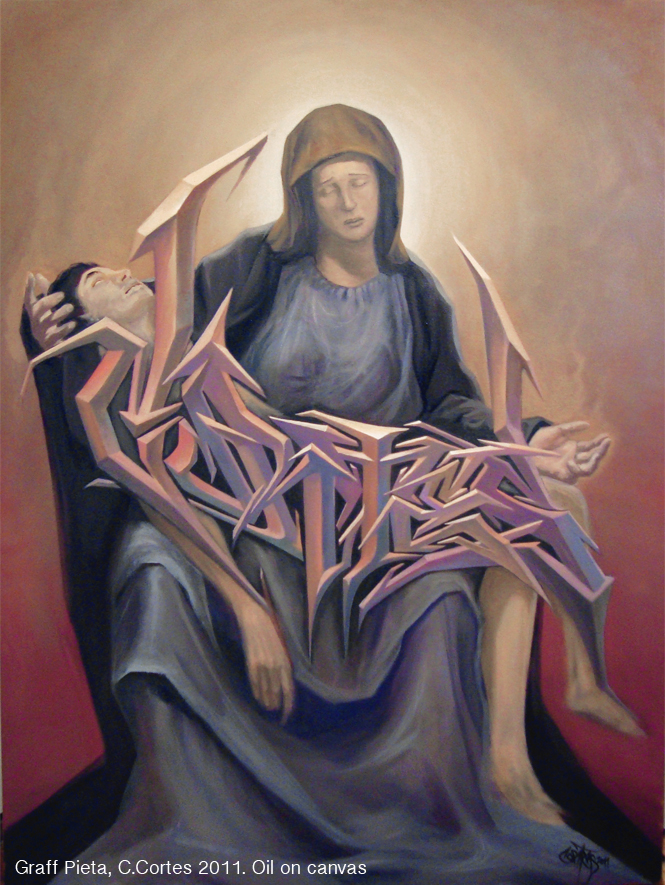
Graff Pieta 2 makes the same argument — louder.
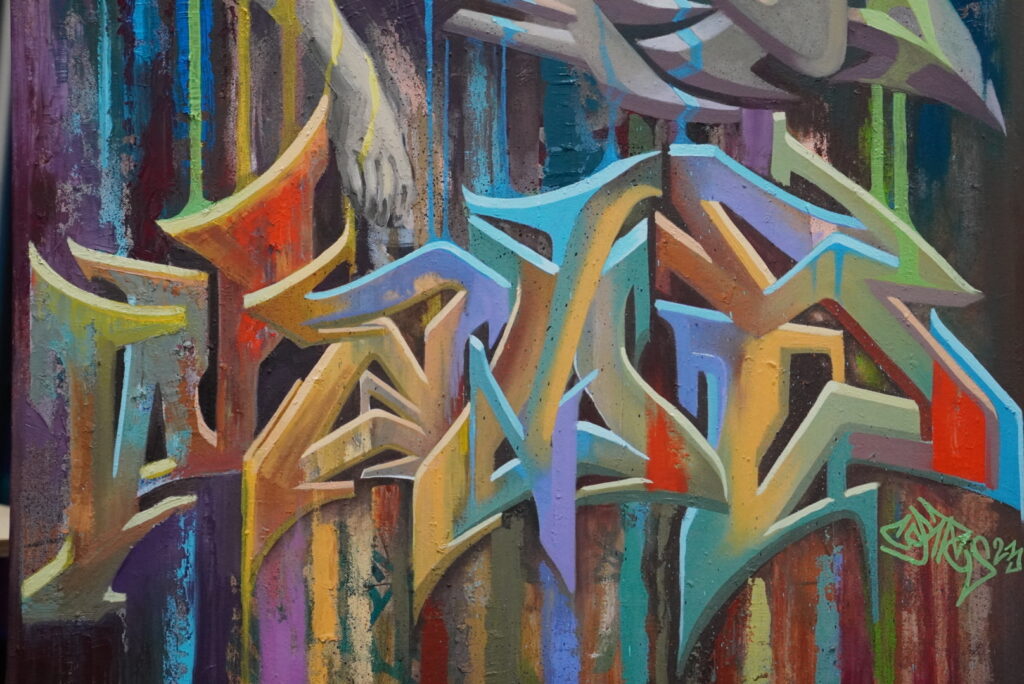
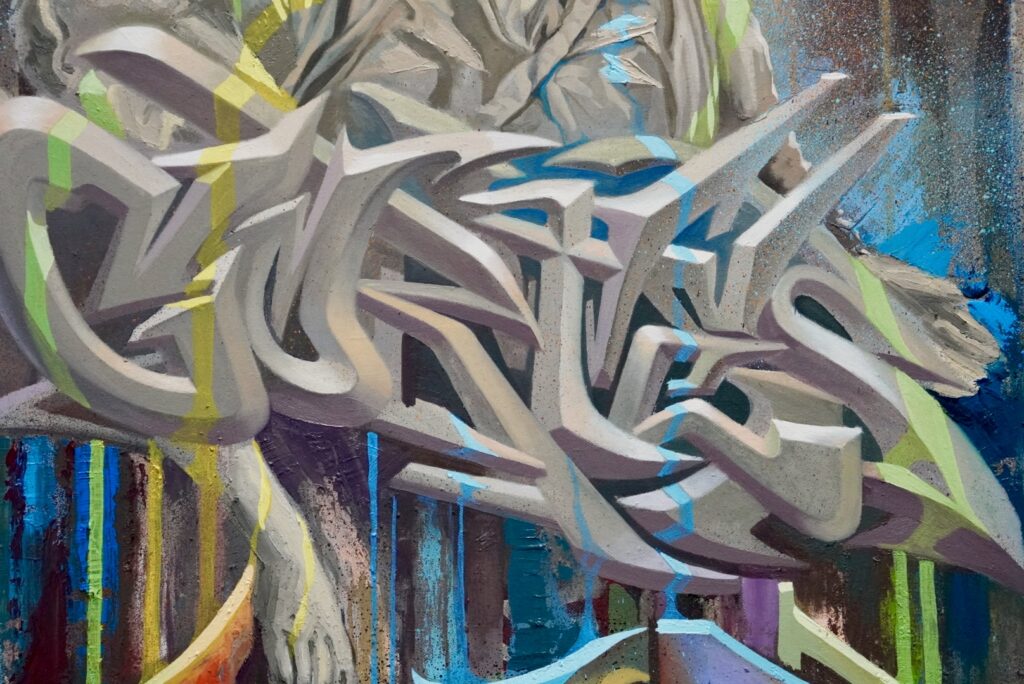
The background has transformed from painted scene to architectural space: ornate columns, a latticed gold altar piece, the A3 mark overhead. The central figure is now rendered in marble-like tones — sculptural, monumental, built to last. And the graffiti lettering has fully evolved. Where the first painting held it in check, the second lets it breathe. Layered, dimensional, pushing forward in golds and teals and blues, with color dripping down from the figures like something that can no longer be contained. The tag WAQS — Cortes's graffiti name from the 90s — runs through the composition, connecting where he came from to where he is now.
The figures are still there. The weight is still there. But the language has grown up.
What the Work Is Actually About
Look at the shapes. Look at the forms. The graffiti lettering in both paintings functions as more than text — it's a body, something carried, something that has weight and presence and demands to be held. In the first painting it's fragile, almost skeletal. In the second it's fully realized — three-dimensional, impossible to ignore.
That's the conversation: between something ancient and something immediate. Between a visual tradition that took centuries to build and a visual language that developed on walls and trains and city surfaces over just a few decades. Neither is more legitimate than the other. Both are systems for giving form to what words can't carry.
Cortes pays attention to what images say on their own terms — what symbols communicate before the viewer brings their own framework to it, what shapes do to the body when you stand in front of them. He's not asking for permission to call this art. He's sharing it with the people who will recognize it for what it is.
Come See It
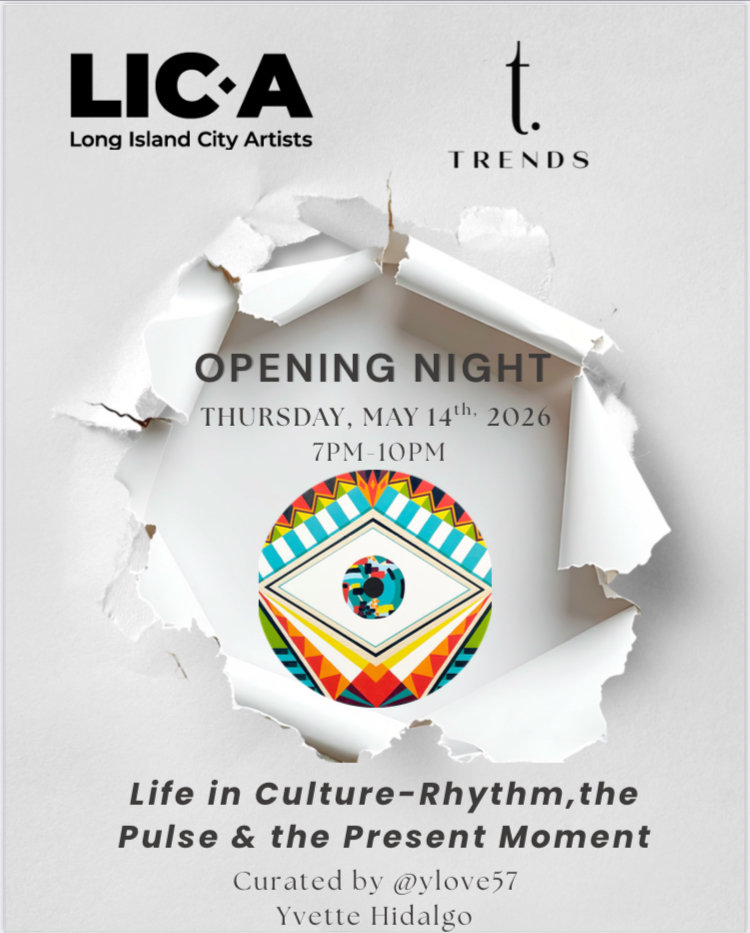
Opening Night: Thursday, May 14 | 7–10PM
On view: May 14–21
Trends Gallery — 27-25 44th Dr, Long Island City, NY 11101
Part of Life in Culture — Rhythm, the Pulse & the Present Moment, curated by @ylove57 / Yvette Hidalgo, presented by Long Island City Arts Open x Trends Gallery.